

Discussion
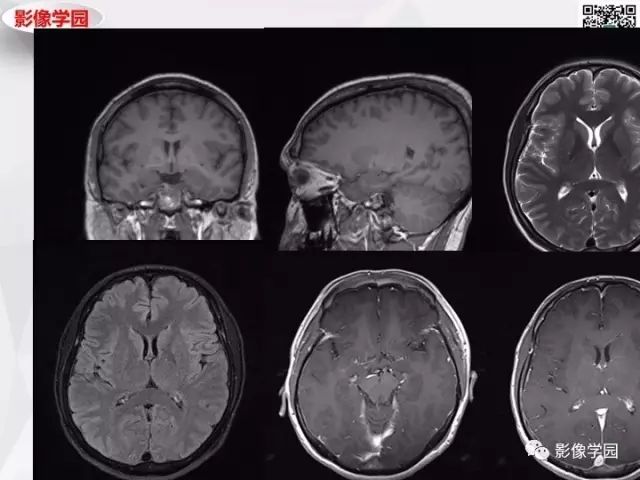
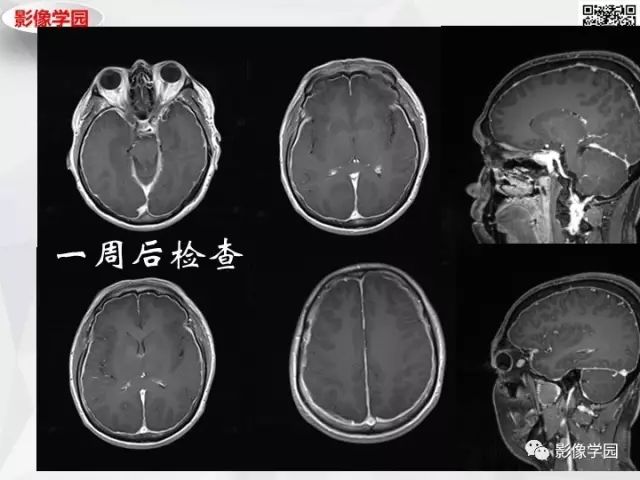
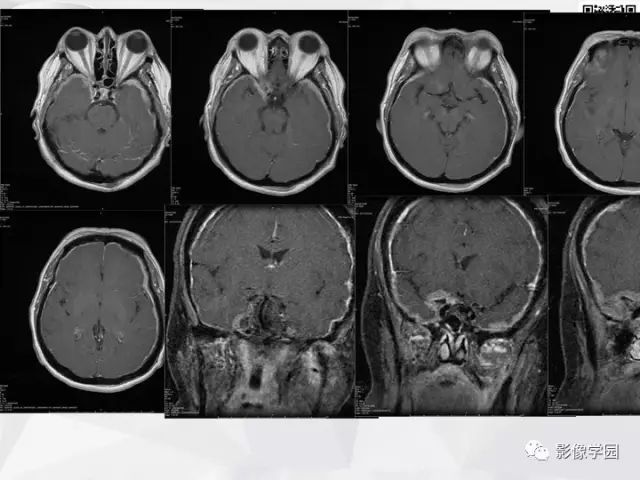
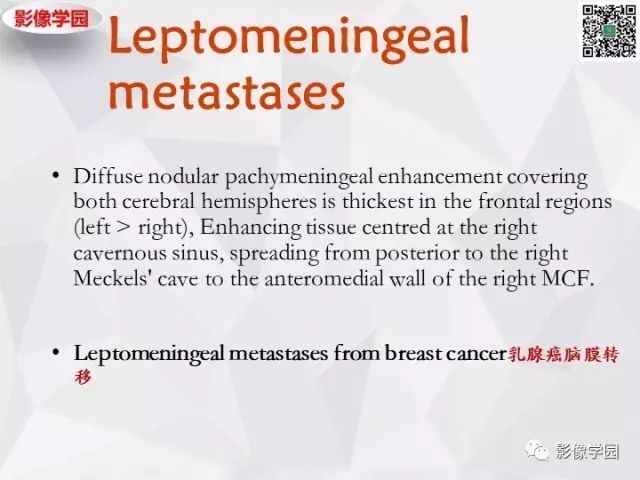
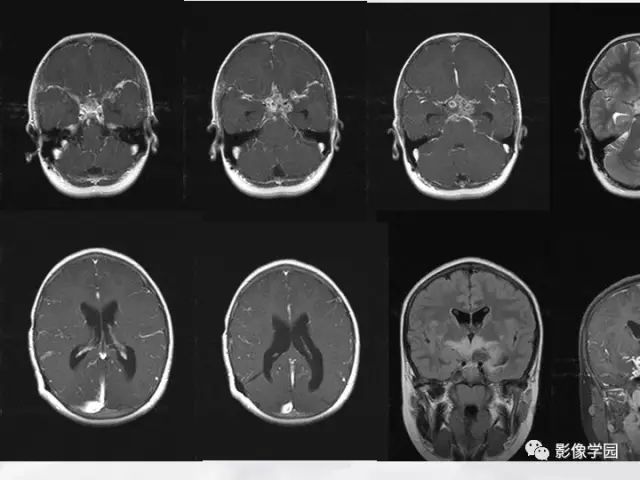
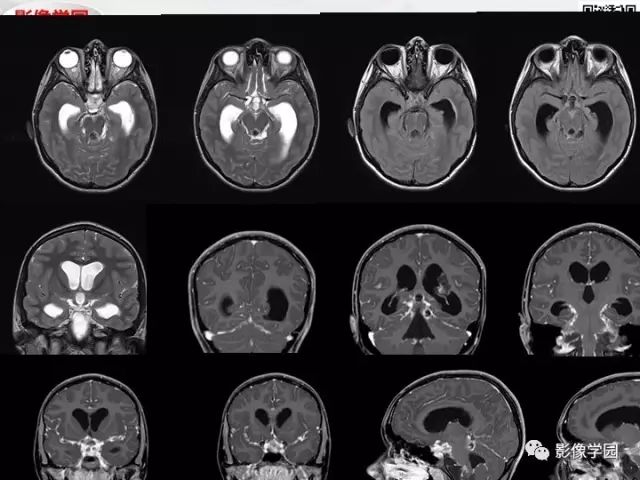
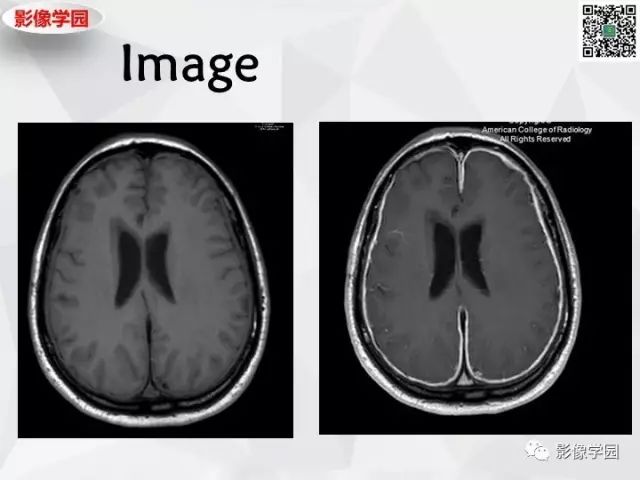
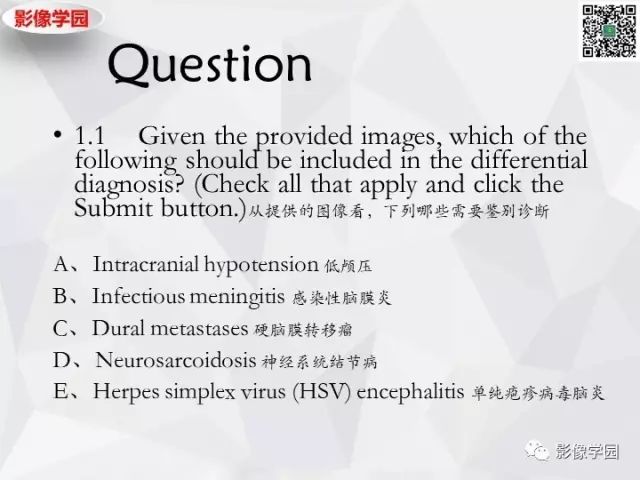
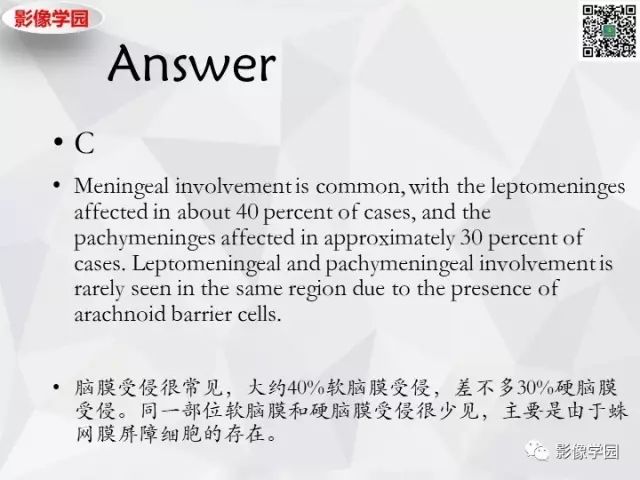
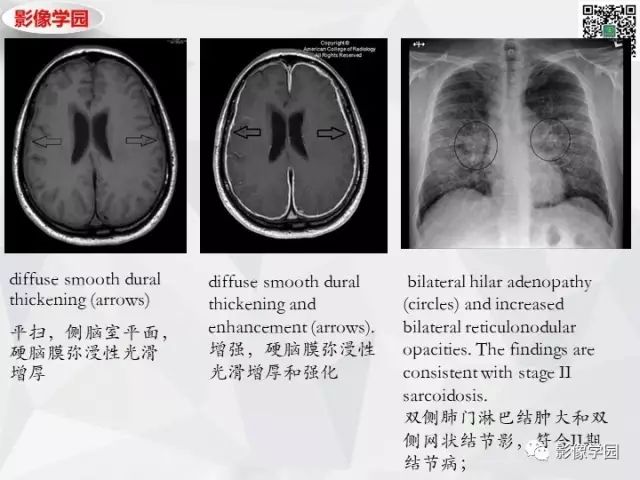
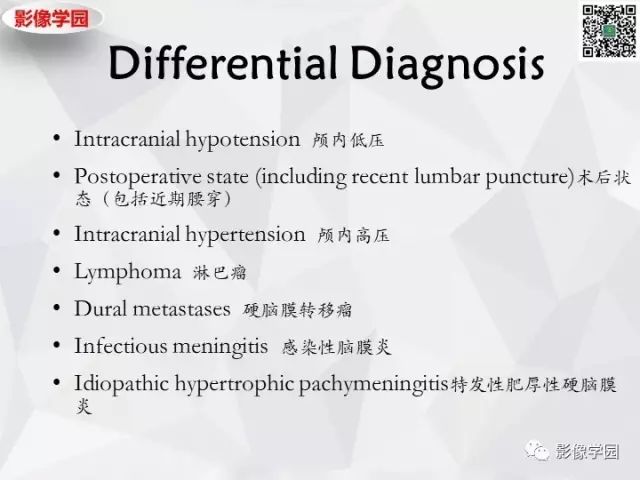
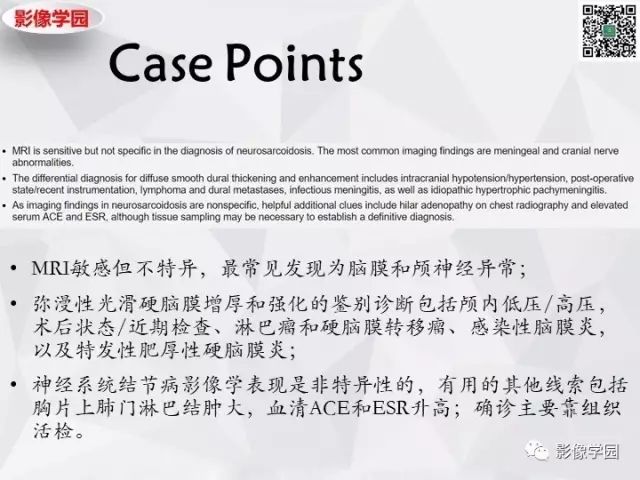
Approximately five to 10 percent of patients with systemic sarcoidosis will manifest neurological symptoms. Often referred to as “the great mimicker,” neurosarcoidosis is associated with a wide spectrum of clinical presentations and imaging findings. MRI is highly sensitive but not specific in the detection of neurosarcoidosis. Pachymeningeal thickening and enhancement is found in approximately one-third of cases. The differential diagnosis for pachymeningeal enhancement also includes intracranial hypotension/hypertension, postoperative state/recent instrumentation, lymphoma, dural metastases, infectious meningitis, and idiopathic pachymeningitis.
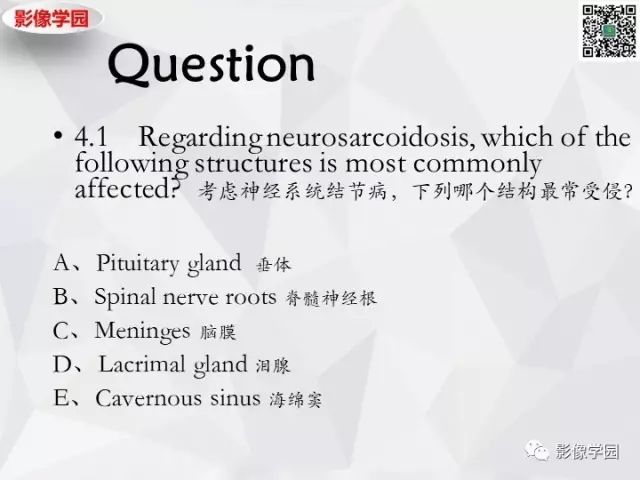
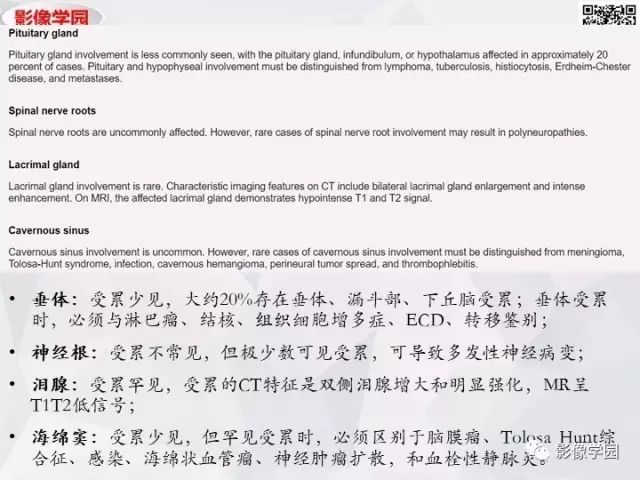
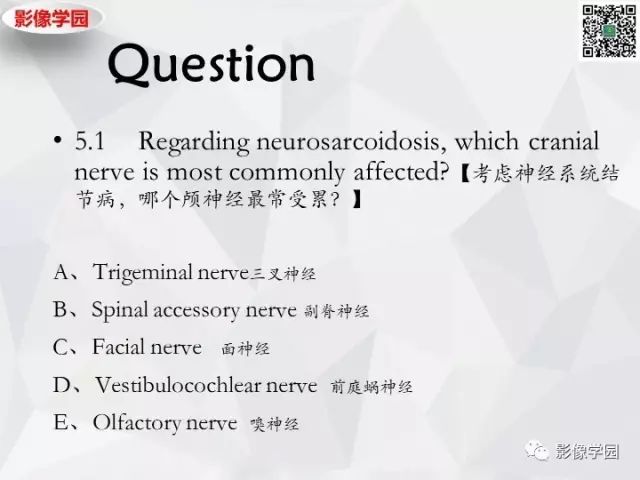
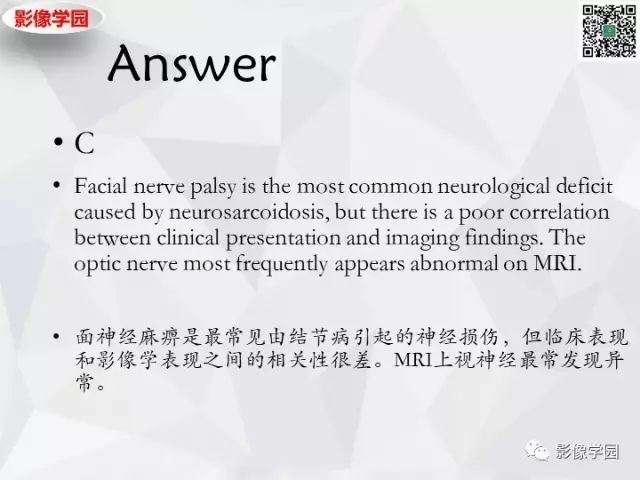
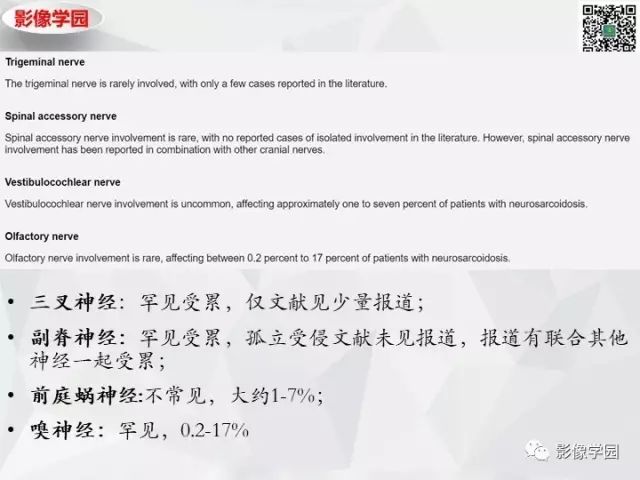
Neurosarcoidosis also commonly presents with cranial nerve enhancement (50 percent), particularly the facial and optic nerves; leptomeningeal enhancement (40 percent), with a predilection for the basal cisterns; and multiple intraparenchymal masses (35 percent), typically with high T2 signal, enhancement, and associated leptomeningeal involvement. Less common imaging presentations include intramedullary spinal masses with associated fusiform spinal cord enlargement (25 percent); pituitary and hypophyseal involvement, including masses or enhancement of the infundibulum (15 percent); and solitary masses in the brain (15 percent).
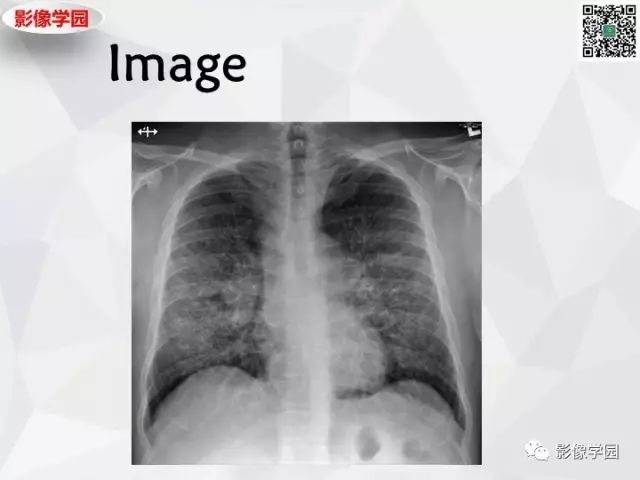
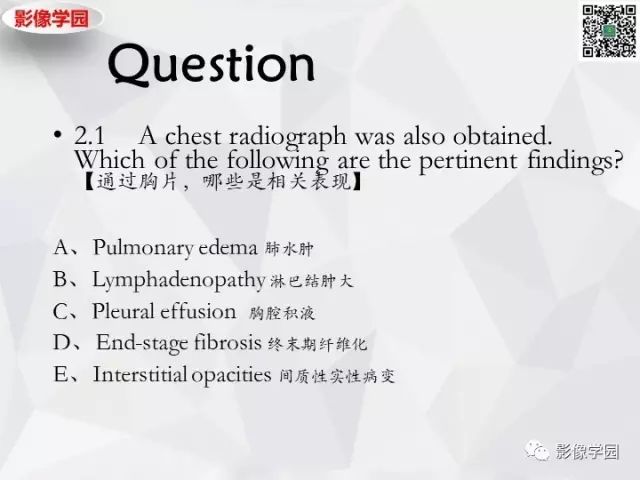
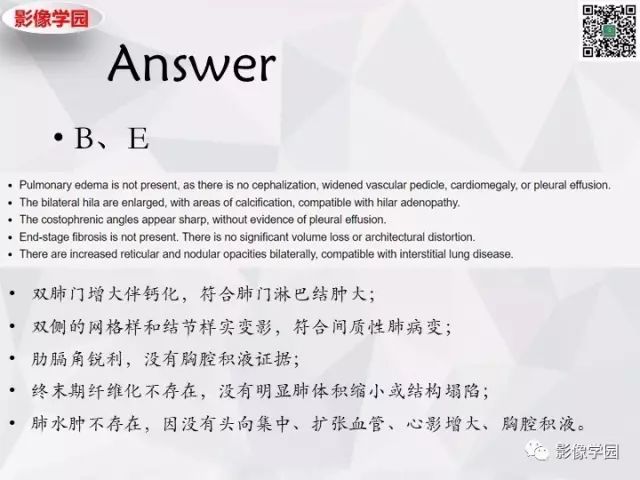
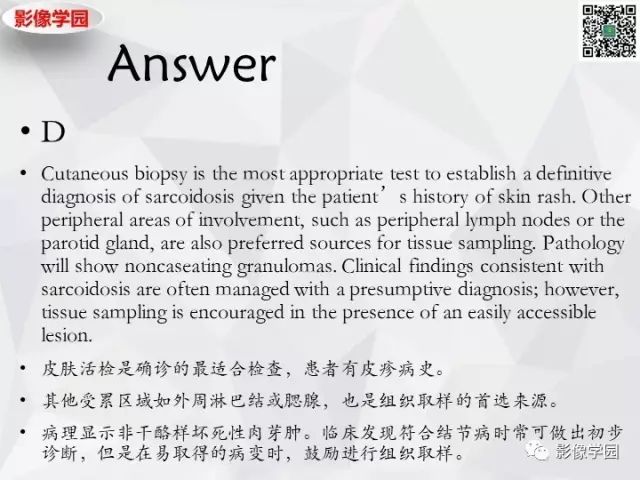
As neurosarcoidosis can affect any part of the nervous system, the clinical presentation is highly variable and depends on the location of the lesion. Given the poor specificity of imaging findings, helpful additional diagnostic clues include hilar adenopathy on chest radiography, as well as elevated serum angiotensin converting enzyme (ACE) and erythrocyte sedimentation rate (ESR), although tissue sampling is frequently required for definitive diagnosis.