髓外造血是骨髓红系造血功能衰竭的响应。髓外造血发生在血红蛋白病,骨髓增生性疾病或骨髓浸润性疾病。它大多发生在脾脏和肝脏,偶尔在淋巴结中出现。不常见的器官包括胸膜、肺、胃肠道、乳腺、皮肤、脑、肾和肾上腺。
病理病因
- 骨髓增生性疾病
.慢性粒细胞性白血病
.真性红细胞增多症
.原发性血小板增多症
.骨髓纤维化伴髓样化生
- 血红蛋白病
.镰状细胞病
- 地中海贫血
影像学特征
髓外造血器官,影像学上通常表现为器官增大,如超声、CT或MRI上表现为肝肿大、脾大。然而,在不常见的情况下,髓外造血可以发生在胸腔内,呈后纵隔肿块,变现为单侧或双侧脊柱旁肿块,边缘光滑,轮廓分明,常呈分叶状边缘。
病例图片

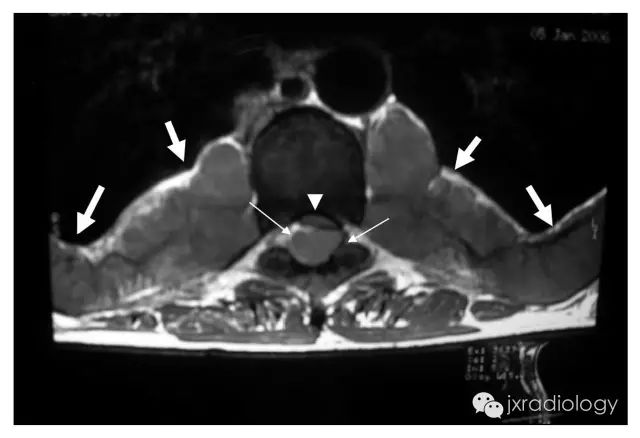
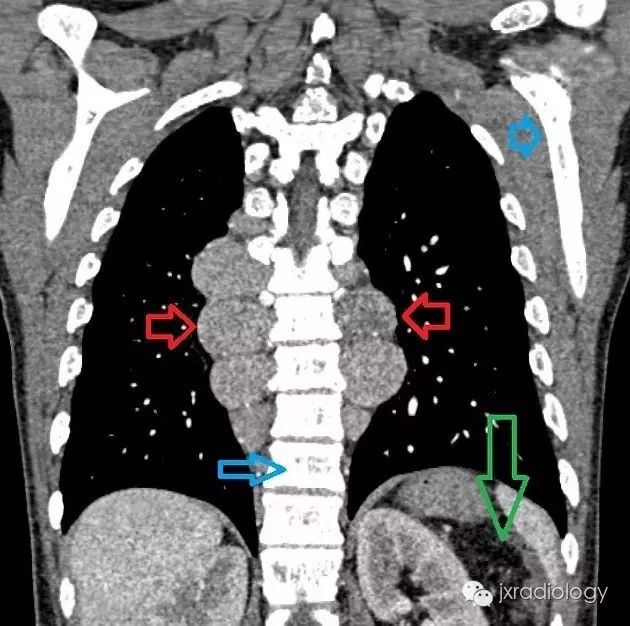
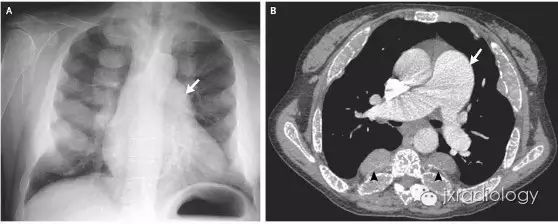
(图源:N Engl J Med 2010; 362:253)
A 47-year-old woman of Italian descent with a history of transfusion-dependent β-thalassemia . Chest radiography (Panel A, arrow) and computed tomography (Panel B, arrow) show enlarged central pulmonary arteries owing to pulmonary arterial hypertension. In patients with thalassemia, such enlargement is thought to arise from chronic anemia, hemolysis, and an increased tendency for microscopic thrombi to form within the pulmonary vasculature. Bilateral paravertebral soft-tissue masses (Panel B, arrowheads), as well as marked medullary expansion of the bony structures (with the ribs showing the most pronounced involvement), were also present, findings that are associated with compensatory extramedullary hematopoiesis.
47岁意大利裔女性,有输血依赖性β地中海贫血病史。胸片(图A,箭头)和计算机断层扫描(图B,箭头)显示肺动脉高压引起的中央肺动脉增大。在地中海贫血患者中,这种增大被认为是由慢性贫血、溶血和肺血管内显微镜下血栓形成增加的趋势引起的。双侧椎旁软组织肿块(图B,箭头),以及骨性结构明显的髓腔扩张(肋骨受累最明显),这些表现与代偿性髓外造血有关。