History: An 8-year-old girl presents with persistent headaches for the past several weeks and nausea and vomiting for past several days.
病史:8岁女孩,持续性头痛数周,恶心、呕吐数天。
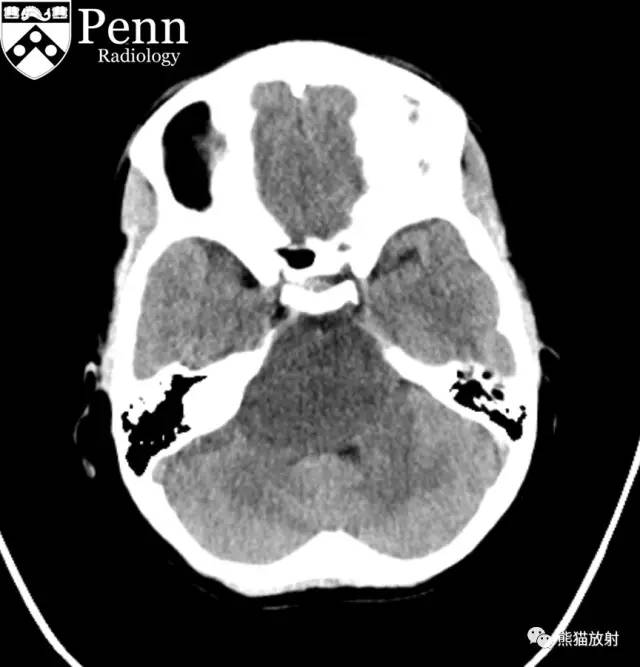
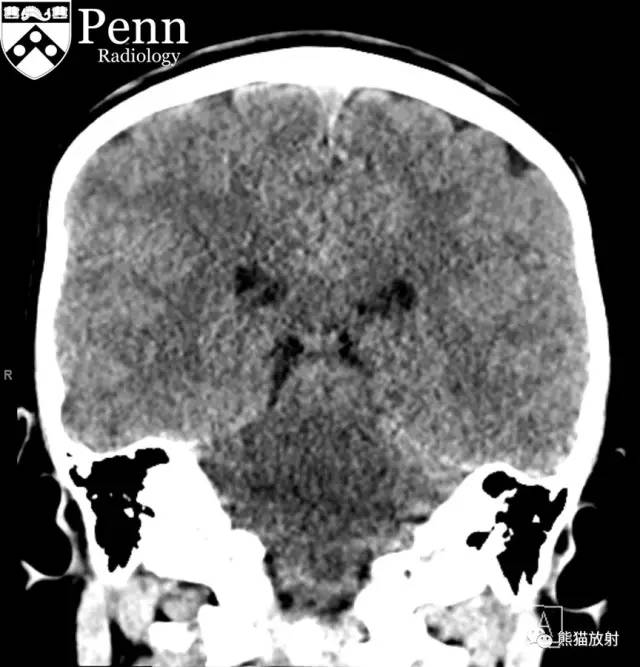
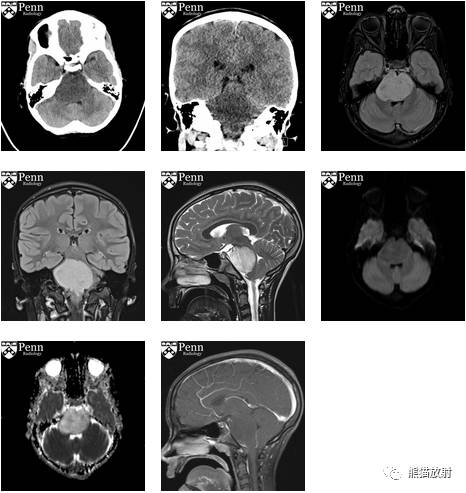
A CT scan of the head was obtained in the emergency department.
行急诊颅脑CT平扫
MR images
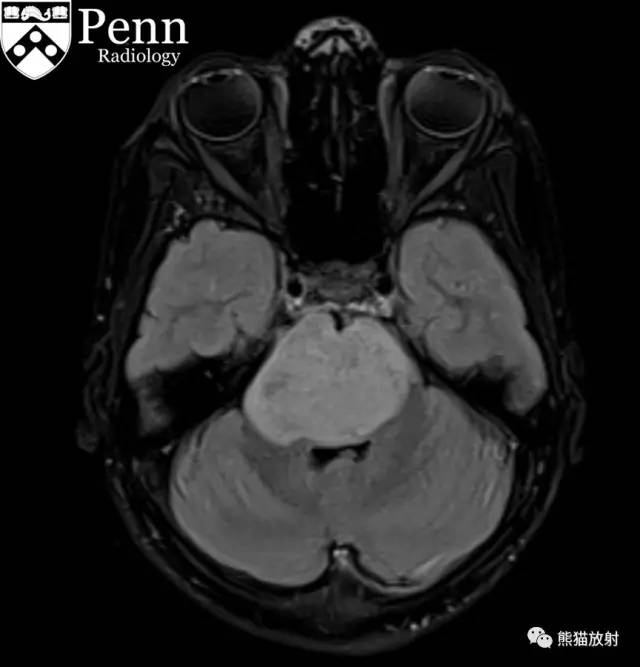
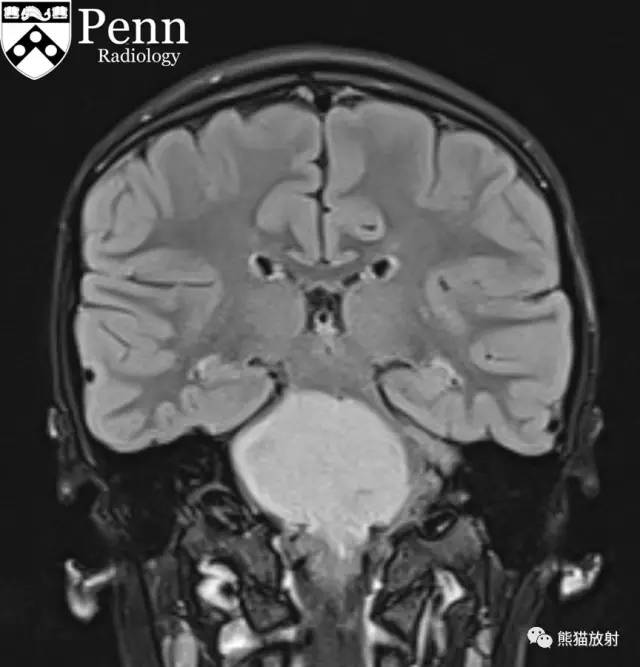
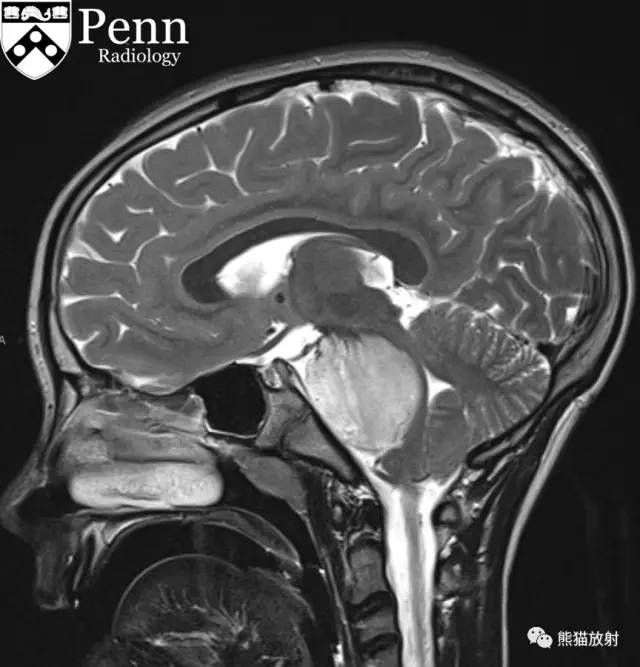
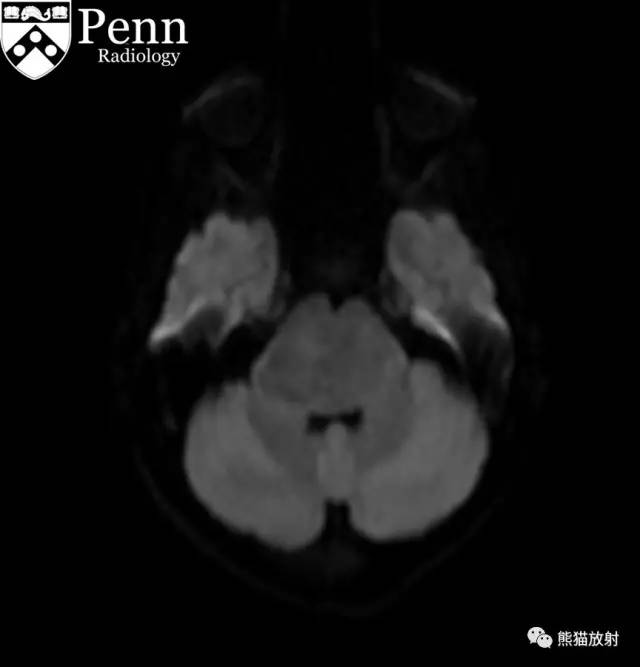
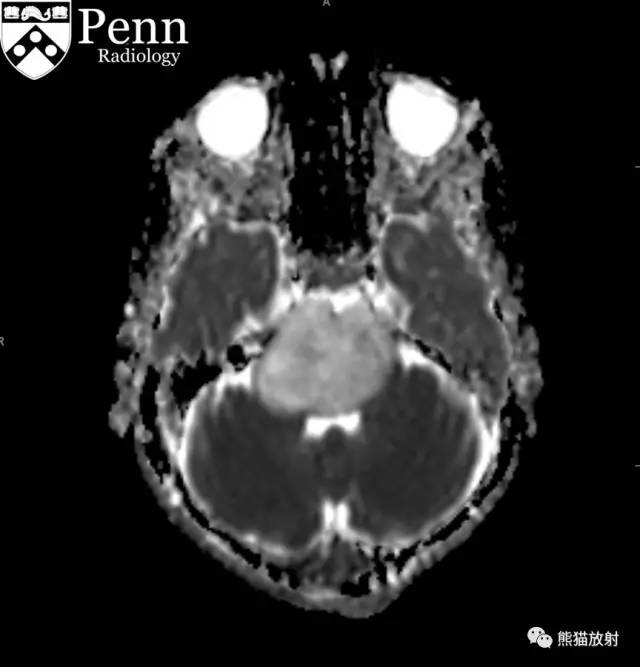
The patient was admitted for further evaluation. An MRI exam of the head was obtained. In order: axial fluid-attenuated inversion-recovery (FLAIR), coronal FLAIR, sagittal T2-weighted, and diffusion-weighted images (DWI), as well as apparent diffusion coefficient (ADC) map.
进一步行颅脑MR扫描:轴位/冠状FLAIR、矢状T2WI、DWI、ADC图。
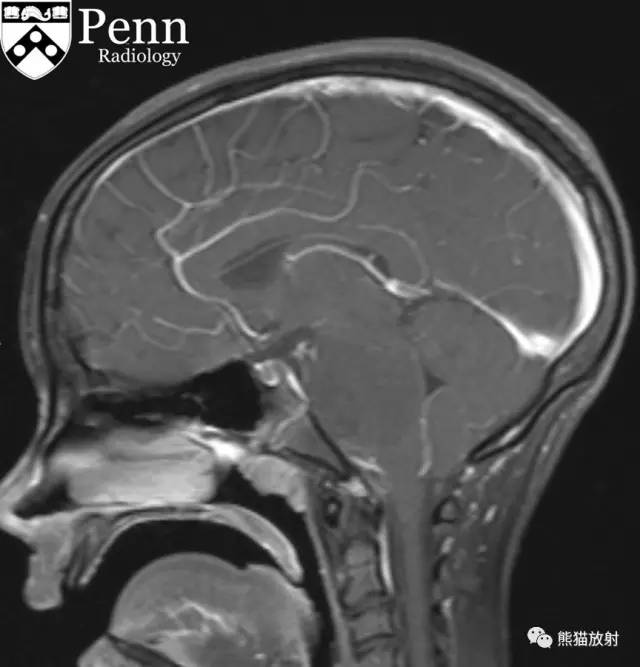
Postcontrast sagittal T1-weighted image is shown below.
矢状增强图像如下所示。
Findings
- CT: There is a hypodense expansile mass centered in the pons.
- MRI: There is an expansile mass in the pons that is homogenously T1-isointense and T2-hyperintense, and it does not exhibit enhancement or restricted diffusion.
影像表现:
- CT:脑桥为中心的低密度膨胀性肿物
- MR:脑桥膨胀性肿物呈均匀等T1长T2信号,无强化,无弥散受限。
Differential diagnosis
- Diffuse intrinsic pontine glioma
- Tectal glioma
- Neurofibromatosis type 1
- Osmotic demyelination syndrome
- Acute disseminated encephalomyelitis
鉴别诊断:
- 弥漫性内生性脑桥胶质瘤
- 顶盖胶质瘤
- 神经纤维瘤病 1型
- 渗透性脱髓鞘综合征
- 急性播散性脑脊髓炎
Diagnosis: Diffuse intrinsic pontine glioma
最后诊断:弥漫性内生性脑桥胶质瘤
Key points
Diffuse intrinsic pontine glioma
弥漫性内生性脑桥胶质瘤
Background
- Brain tumors are the most common solid pediatric tumor.
- Brainstem gliomas are relatively common pediatric central nervous system (CNS) tumors, representing approximately 15% of primary CNS tumors in children.
- The pons is the most common location for brainstem gliomas.
- It accounts for approximately 80% of cases.
- Patients with a diffuse intrinsic pontine glioma have a very poor prognosis.
- Although only comprising 15% of primary CNS tumors (as noted above), brainstem gliomas account for the largest proportion of deaths at approximately 38%.
- Patients with a diffuse intrinsic pontine glioma have a median survival of less than 12 months.
背景:
- 脑肿瘤是儿童最常见的实性肿瘤
- 脑干胶质瘤是相对常见的儿童中枢神经系统肿瘤,在儿童原发性CNS肿瘤中约占15%;桥脑是脑干胶质瘤最常见的发病部位,约占80%。
- 弥漫性内生性脑桥胶质瘤预后差。仅占儿童原发性CNS肿瘤的15%,脑干胶质瘤的死亡率最高,约占38%;中位生存期不足12个月。
Clinical presentation
- Diffuse intrinsic pontine glioma often presents initially as a very large mass.
- Symptoms typically develop relatively acutely (less than one month), although more subtle symptoms may develop over a period of months.
- The classic described triad of symptoms includes cranial nerve deficits, ataxia, and long tract signs.
- Patients may develop signs of obstructive hydrocephalus due to compression of the fourth ventricle.
临床表现:
- 弥漫性内生性脑桥胶质瘤常表现为较大的肿物;
- 症状出现的相对较急(小于1个月),尽管大部分症状轻微,但可在数月内进展;
- 典型表现“三联征”包括:颅神经麻痹、共济失调、长束体征;
- 随病情进展,肿瘤压迫四脑室,患者可出现梗阻性脑积水征象。
Imaging findings
Diagnosis is typically made solely on the base of imaging (due to critical location), though occasionally tissue sampling is done to confirm pathology.
- CT: Often appears as a hypodense and expansile lesion.
- MRI:
- Appears as an expansile, T2-hyperintense, T1-iso/hypointense mass with no/mild enhancement and typically without associated restricted diffusion.
- Enhancement is associated with a worse prognosis.
- Diffuse versus focal tumor (focal with better prognosis).
影像表现:
由于特定的发病部位(脑桥),典型病例可单独依据影像进行诊断,偶尔活检进行病理学证实。
CT:常表现为低密度灶,有膨胀性;
MRI:
- 表现为膨胀性的T2WI高信号,T1WI等或低信号肿物,无强化或轻度强化,无弥散受限;
- 有强化提示预后较差;
- 肿瘤弥漫或局限性(局限性预后较好)。
相关文献: