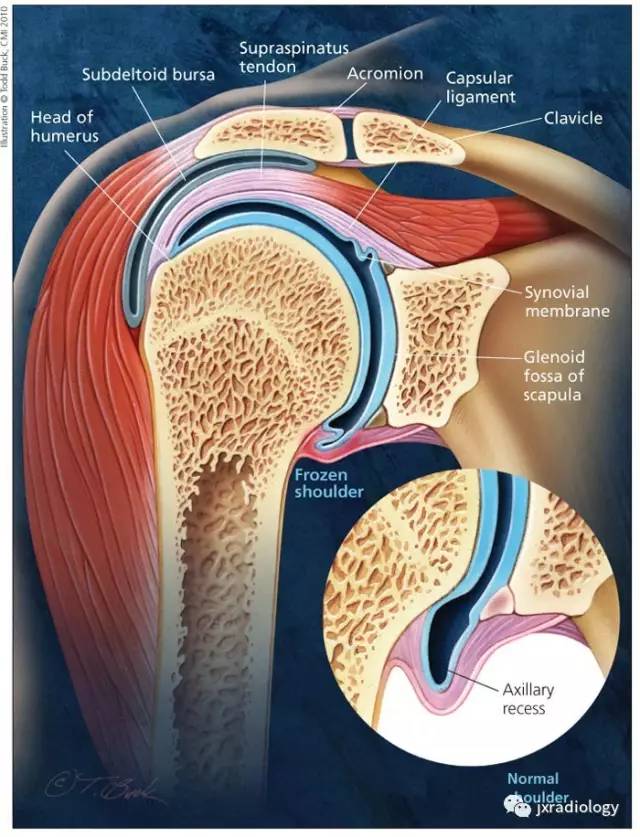
腋隐窝解剖示意图:
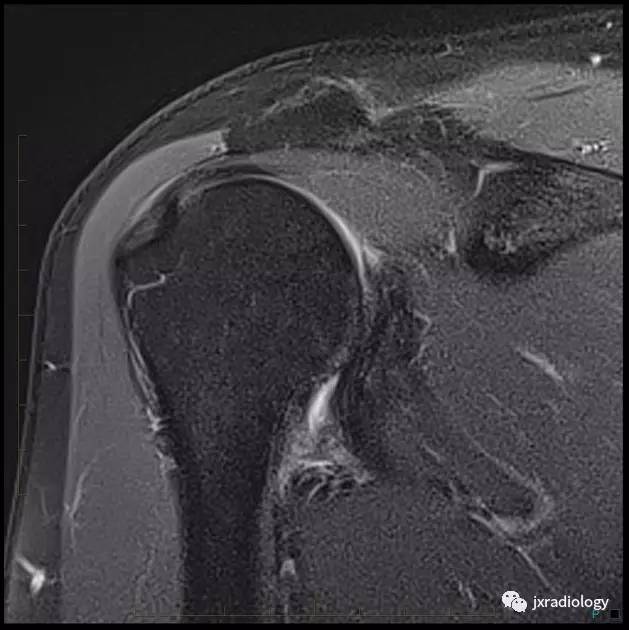
腋囊的增厚和水肿:
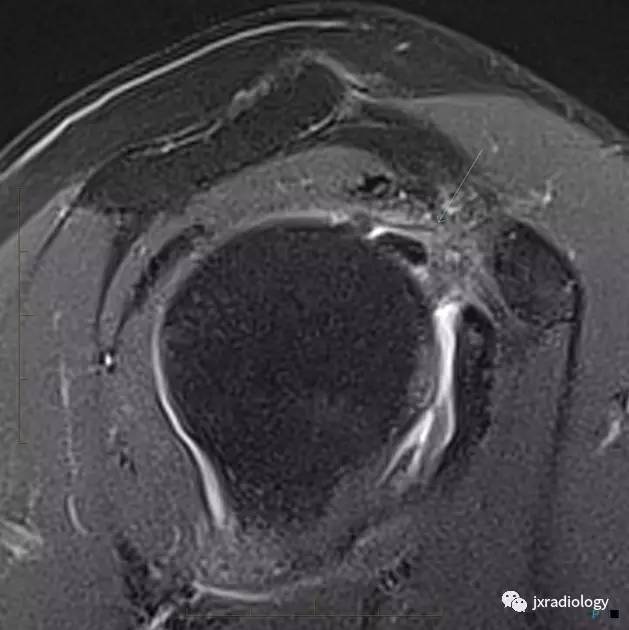
肩袖间隙异常软组织信号(细箭):
腋囊增厚和水肿(细箭):
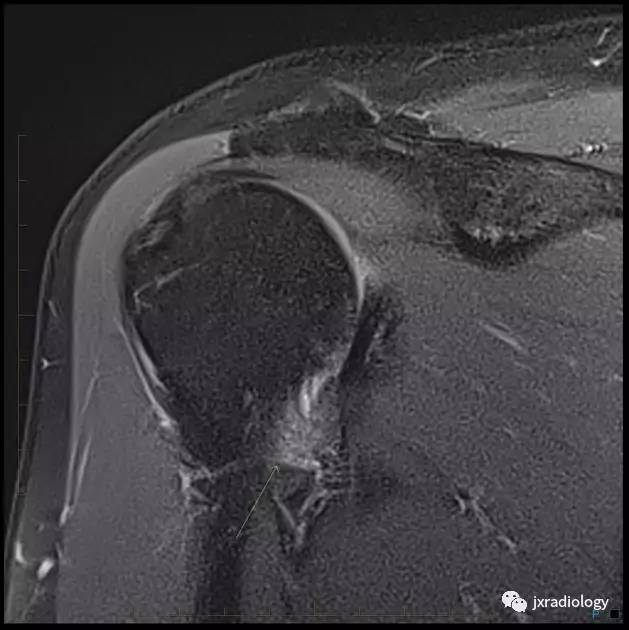
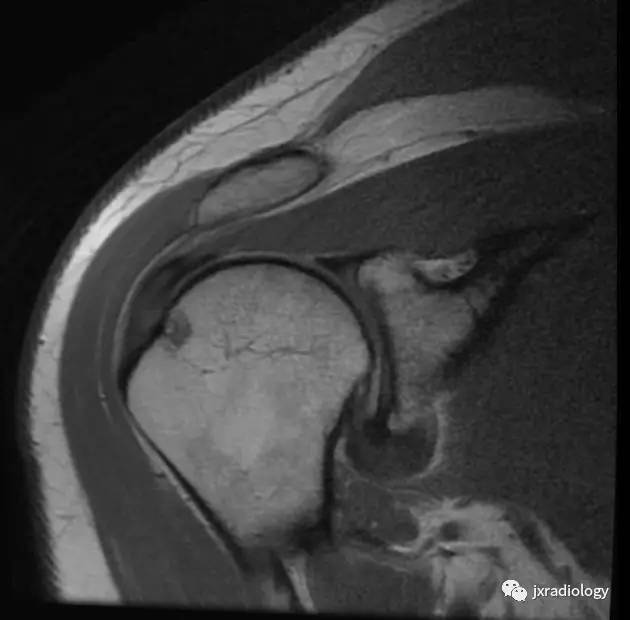
腋囊增厚纤维化(T1/T2均为低信号):
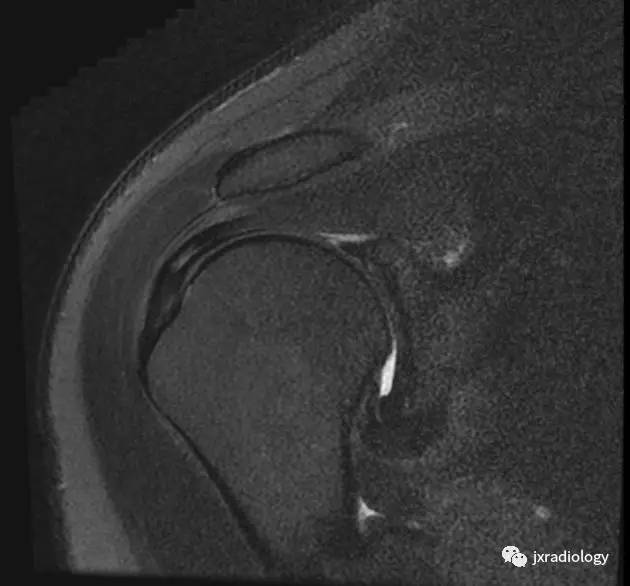
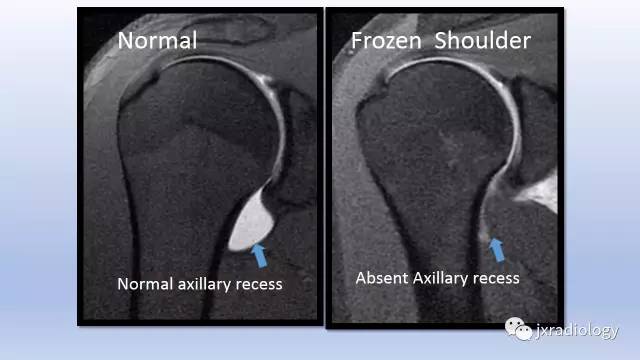
MRI关节囊造影提示腋囊体积缩小:
原文:https://radiopaedia.org/articles/adhesive-capsulitis-of-the-shoulder
Adhesive capsulitis of the shoulder, also known as frozen shoulder, is a condition characterised by thickening and contraction of the shoulder joint capsule and surrounding synovium. Adhesive capsulitis can rarely affect other sites such as the ankle .
粘连性肩关节囊炎 ,也称冻结肩,其特征是肩关节囊和周围滑膜的增厚和挛缩。粘连性关节囊炎很少影响其他部位,如踝关节。
Epidemiology
The incidence in the general population is thought to be 3-5%. Adhesive capsulitis typically affects women in the 5th to 6th decades of life, although patients with co-morbidities such as diabetes may develop the condition at earlier ages. The incidence in patients with diabetes is reported to be 2 to 4 times higher than in the general population.
流行病学
一般人群的发病率为3-5%。粘连性关节囊炎通常见于50-60岁的女性,患有糖尿病等并发症的患者发病年龄可能会提前。糖尿病患者的发病率高于普通人群的2〜4倍。
Clinical presentation
Adhesive capsulitis presentation can be broken into three distinct stages:
- freezing: painful stage
- patients may not present during this stage because they think that eventually, the pain will resolve if self-treated.
- as the symptoms progress, pain worsens and both active and passive range of motion (ROM) becomes more restricted
- this can eventually result in the patient seeking medical consultation
- typically lasts between 3 and 9 months and is characterised by an acute synovitis of the glenohumeral joint
- frozen: transitional stage
- most patients will progress to the second stage
- during this stage, shoulder pain does not necessarily worsen
- because of pain at end ROM, use of the arm may be limited causing muscular disuse
- can last between 4 to 12 months
- the common capsular pattern of limitation has historically been described as diminishing motions with external shoulder rotation being the most limited, followed closely by shoulder flexion, and internal rotation
- there eventually becomes a point in the frozen stage that pain does not occur at the end of ROM
- thawing stage
- begins when ROM begins to improve
- lasts anywhere from 12 to 42 months and is defined by a gradual return of shoulder mobility
临床症状:
粘连性关节囊炎分为三个阶段:
凝结期:疼痛期
- 患者在这个阶段可能不会出现,因为他们认为最终,如果自我治疗,疼痛就会解决。
- 随着症状的进展,疼痛恶化,主动和被动的运动范围(ROM)变得更加受限制
- 这可能最终导致病人寻求医疗咨询
- 通常持续3至9个月,其特征是盂肱关节的急性滑膜炎
冻结期:过渡期
- 大多数患者将进入此阶段
- 在这个阶段,疼痛并不一定会恶化
- 由于运动时的疼痛,手臂功能可能会受到限制,导致肌肉废用
- 可持续4至12个月
- 常见的限制模式历史上被描述为减少运动,外肩旋转是最受限的,其次是肩部屈曲和内旋
- 最终在慢性期运动受限成为一个点,在运动范围结束时不会发生疼痛
解冻期
- 开始时运动范围开始改善
- 持续12至42个月,肩关节运动逐步恢复
Pathology
Adhesive capsulitis is divided into two main types:
- primary or idiopathic
- absence of preceding trauma
- secondary
- major or minor repetitive trauma
- shoulder or thoracic surgery
- endocrine, e.g. diabetes, hyperthyroidism
- rheumatological conditions
病理
粘连性关节囊炎分为两大类:
原发性或特发性
- 无外伤病史
继发性
- 重大或轻微的重复创伤
- 肩部或胸部手术
- 内分泌,例如糖尿病,甲状腺功能亢进
- 风湿病
Radiographic features
MRI/MR arthrography
- normal inferior glenohumeral ligament measures <4 mm and is best seen on coronal oblique images at the mid glenoid level; in adhesive capsulitis, the axillary recess may show thickening ≥1.3 cm
- joint capsule thickening
- abnormal soft tissue thickening within the rotator interval with signal alteration
- abnormal soft tissue encasing the biceps anchor
- variable enhancement of the capsule and synovium within the axillary recess and rotator interval
Other MR arthrography features include
- thickening of the coracohumeral ligament (CHL)
- subcoracoid triangle sign
影像学表现
MRI / MRI关节造影
- 正常下盂肱韧带测量值<4毫米,在斜冠位上关节囊中间层面显示最好;在粘连性关节囊炎患者中,腋隐窝软组织增厚≥1.3厘米
- 关节囊增厚
- 肩袖间隙异常软组织增厚伴信号异常
- 异常软组织包绕肱二头肌腱
- 增强后腋隐窝和肩袖间隙的关节囊或滑囊强化
其他MR关节造影包括
- 喙肱韧带(CHL)增厚
- 喙突下三角征
- 腋囊正常容量15-18ml,本病小于10ml,多数小于5ml(文献上)
Treatment and prognosis
Adhesive capsulitis is typically a self-limiting disease that improves over 1-2 years. Treatment options include:
- physiotherapy
- corticosteroid injections
- glenohumeral hydrodilatation
- closed manipulation under anaesthesia
- arthroscopic capsular release with lysis of adhesions