At a Glance :
INTRAOSSEOUS MENINGIOMA(颅骨内脑膜瘤)
OSTEOMA(骨瘤)
METASTASIS(转移瘤)
FIBROUS DYSPLASIA(骨纤维异常增殖症)
PAGET\’S DISEASE(佩吉特氏病 or 畸形性骨炎)
ACROMEGALY(肢端肥大症)
SICKLE CELL ANEMIA(镰状细胞贫血)
THALASSEMIA(地中海贫血)
UNILATERAL MEGALENCEPHALY(单侧巨脑畸形)
DYKE– DAVIDOFF– MASON SYNDROME(戴克-大卫杜夫-梅森综合征 or 单侧大脑萎缩)
STURGE–WEBER SYNDROME(斯特奇-韦伯综合征 or 脑三叉神经血管瘤病)
OSTEOPETROSIS(石骨症)
OSTEOMYELITLS(骨髓炎)
FLUOROSIS(氟中毒)
MUCOLIPIDOSIS(黏多糖病)
MYELO BROSIS(骨髓纤维化)
PHENYTOIN METHYSIS(苯妥英钠中毒)
SHUNTED HYDROCEPHALUS(脑积水分流术)
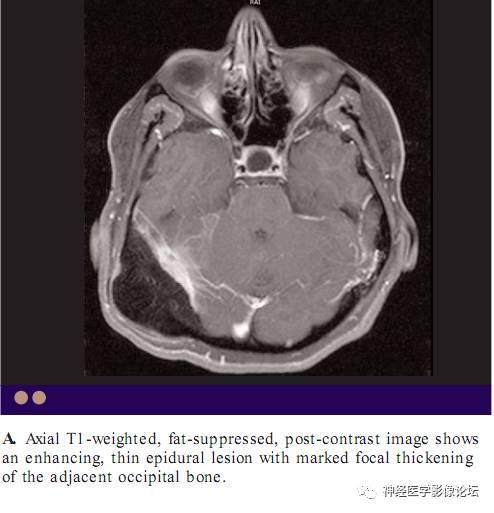
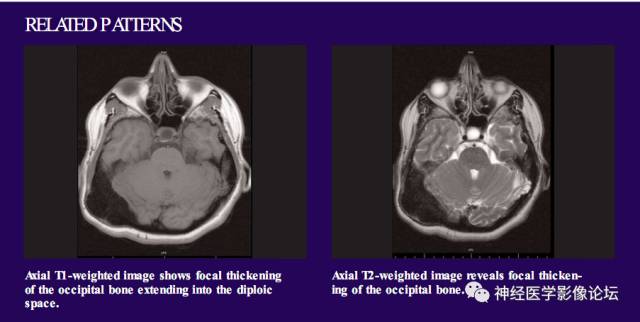
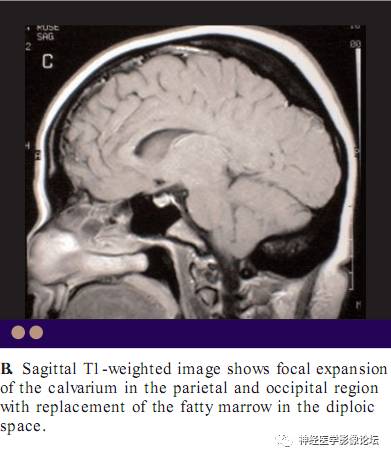
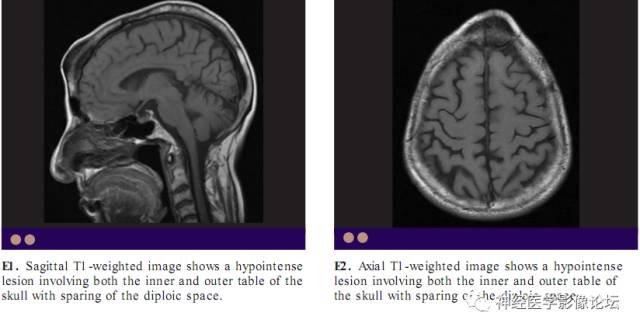
INTRAOSSEOUS MENINGIOMA
Intraosseous meningiomas are likely the rarest manifestation of meningioma. An enhancing dural component may or may not be present. There is usually blastic expansion of both the inner and outer table of the skull.
FIBROUS DYSPLASIA OF BONE
骨纤维异常增殖症
Fibrous dysplasia is a skeletal developmental anomaly. The medullary bone is replaced by fibrous tissue. Malignant degeneration, although uncommon, may occur in fibrous dysplasia. On plain X-ray, it has a classic “ground glass” appearance. MRI shows predominantly hypointensity on both T1 and T2 weighted images. Contrast enhancement is seen on post-contrast images .
OSTEOMA
骨瘤
Osteomas are the most common primary tumors of the bony calvaria, affecting approximately 0.4% of the general population. They are most commonly seen in the paranasal sinuses, especially the frontal sinus, followed by maxilla and mandible. Multiple osteomas of the skull, sinus, and mandible associated with soft tissue tumors of skin and colon polyps are seen in Gardner\’s syndrome. They are benign mesenchymal osteoblastic tumors composed of well differentiated mature bone tissue with a predominantly laminar structure with slow growth.
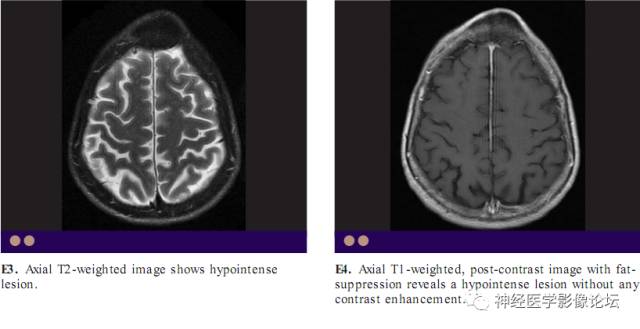
PAGET\’S DISEASE
佩吉特氏病(畸形性骨炎)
The lytic phase of Paget\’s diseaseis followed by evidence of osteogenesis. Areas of osteolysis and osteosclerosis merge imperceptibly with each other. The trabecular pattern is thickened and disorganized and the tables of the skull become thickened. The third stage of Paget\’s disease is the inactive or healing phase. The lesions become more sclerotic and thickening of the tables of the skull is more obvious.
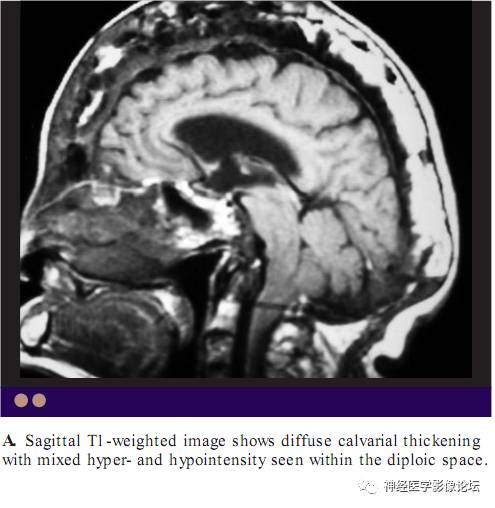
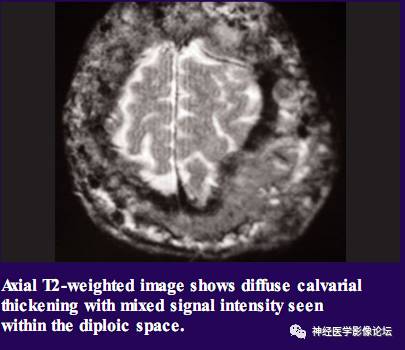
ACROMEGALY
肢端肥大症
Acromegaly is an endocrine disorder due to increased secretion of growth hormone and characterized by enlargement of many skeletal parts. Endochondral bone formation is reactivated and periosteal bone formation is stimulated. There is also overgrowth of soft tissue. Such excessive growth is prominent particularly in the hands, feet and skull, especially lower jaw. The skull demonstrates an enlarged sella turcica, increased thickness of the cranial vault, and prominent sinuses and supraorbital ridges .
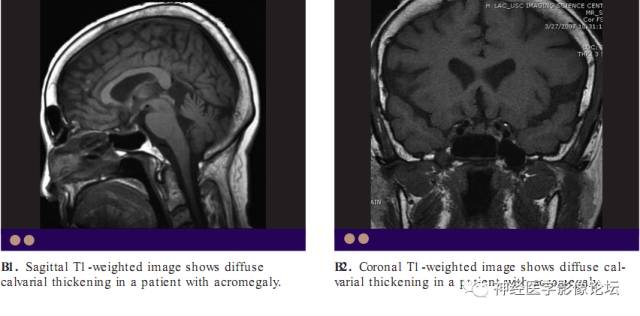
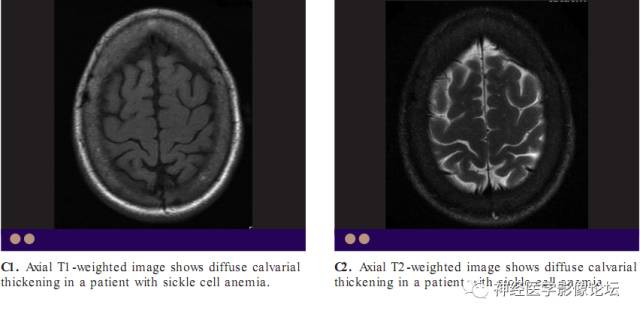
SICKLE CELL ANEMIA
镰状细胞贫血
Sickle cell disease denotes all genotypes that contain at least 1 sickle gene in which HbS makes up at least half the hemoglobin present. Sickle cell anemia is the most severe and most common form. Repeated cycles of deoxygenation and morphologic sickling irreversibly damage red cell membranes and result in hemolysis. Bone marrow increases red blood cell production but is insufficient to compensate for the rate of hemolysis. Increased skull thickness results from expansion of the diploic space,which contains red marrow.
THALASSEMIA
地中海贫血
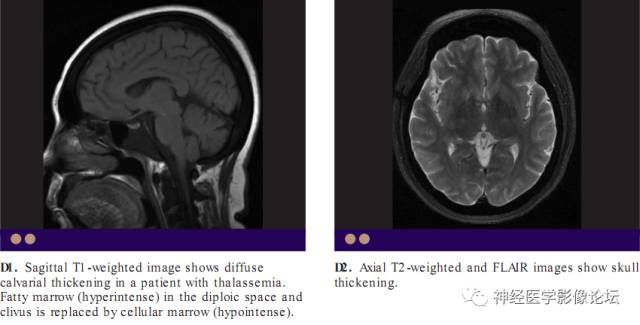
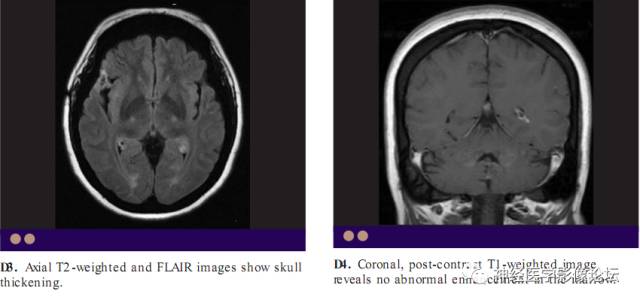
Thalassemia is an inhe rited autosomal recessive disorder. In thalassemia , the genetic defect results in reduced rate of synthesis of one of the globin chains that make up hemoglobin resulting in the formation of abnormal hemoglobin molecules. There are two major types of thalassemia. Alpha thalassemia occurs predominantly in people from Southeast Asia, Middle East, China and Africa
whereas Beta thalassemia is seen in people from Mediterranean region. The skull shows increased thickness dueto hyperplasia of the red marrow in an attempt to compensate for the anemia. Widening of the diploic space and thinning of the outer table of the skull are seen.
UNILATERAL MEGALENCEPHALY
单侧巨脑畸形
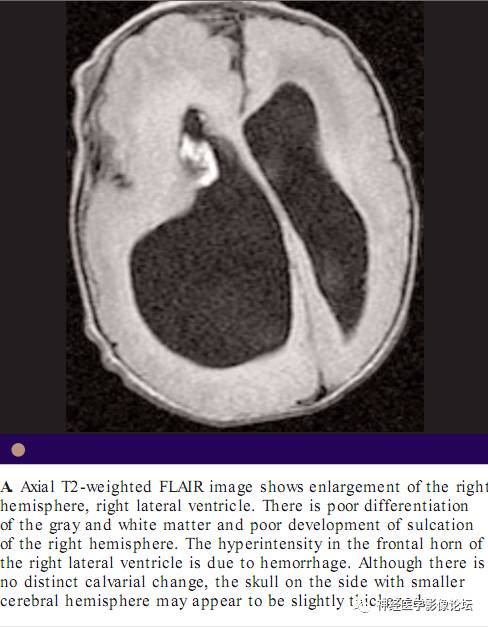
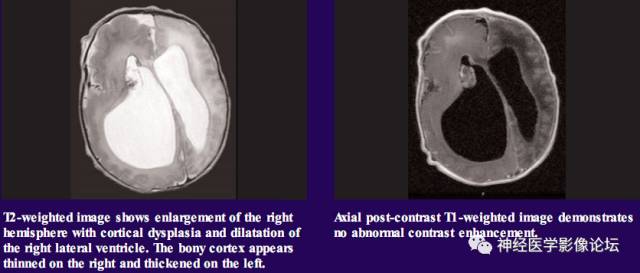
Unilateral megalencephaly is a rare neurological condition in which one side of the brain or part of the one side is abnormally larger than the other. The enlarged side is usually associated with abnormal neuronal migration. As a consequence, the abnormal and enlarged brain tissue causes frequent seizures, usually followed with mental retardation. Unilateral megalencephaly may occur as an
isolated finding in an infant or it may be associated with other syndromes.
DYKE– DAVIDOFF– MASON SYNDROME
戴克-大卫杜夫-梅森综合征(单侧大脑萎缩)
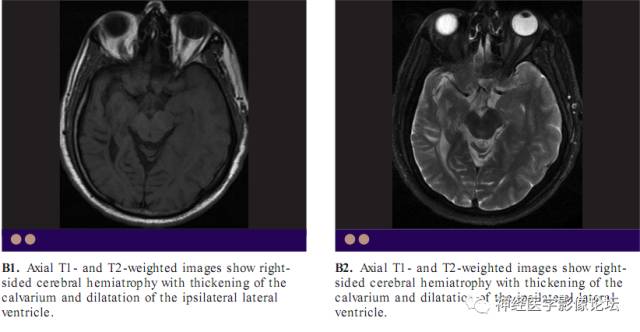
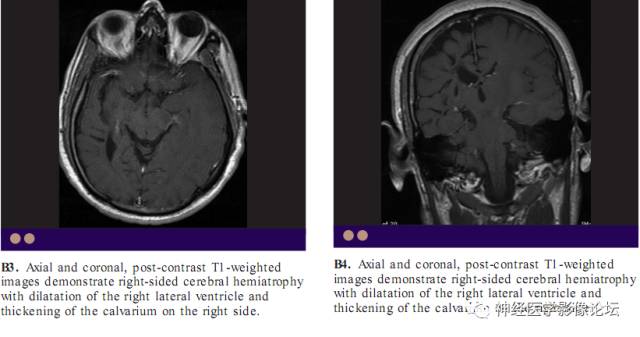
The characteristic findings of Dyke –Davidoff–Mason syndrome consist of unilateral calvarial thickening (especially of the diploic space), expansion of the ipsilateral ethmoid, frontal sinuses and mastoid, and asymmetry of the planum
sphenoidale, anterior clinoid processes.
STURGE–WEBER SYNDROME
斯特奇-韦伯综合征(脑三叉神经血管瘤病)
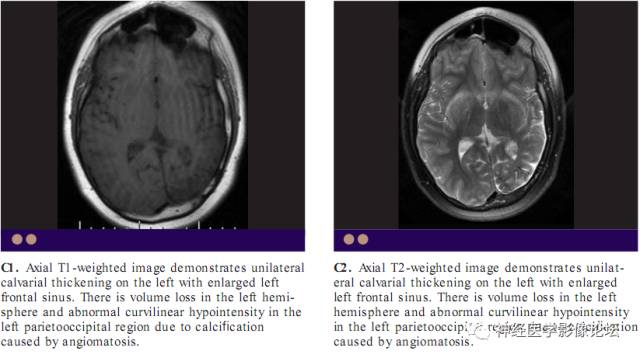
Sturge–Weber syndrome, also known as encephalotrigeminal angiomatosis, is a congenital vascular disorder of the brain, meninges, and the face in the trigeminal distribution, often involving the eye. The intracranial lesion is an
ipsilateral leptomeningeal vascular malformation between the pia and arachnoid membranes. Abnormal cerebral venous drainage is the primary abnormality, with resultant venous hypertension leading to gradual cell death, progressive atrophy, and calcification of the cortex. A parietal, occipital location is most common. Angiomas may involve the choroid plexus and eye. Noncontrast CT shows the typical “tram track”calcification. MRI shows the leptomeningeal, gyral, and choroid enhancement. Abnormal deep draining veins and veins with the diploic space may be seen. Cerebral hemiatrophy is present.
Osteopetrosis
石骨症
Osteopetrosis is a rare hereditary disorder that results from defective osteoclasts. Bones become sclerotic and thick, but their abnormal structure results in them being both weak and brittle.
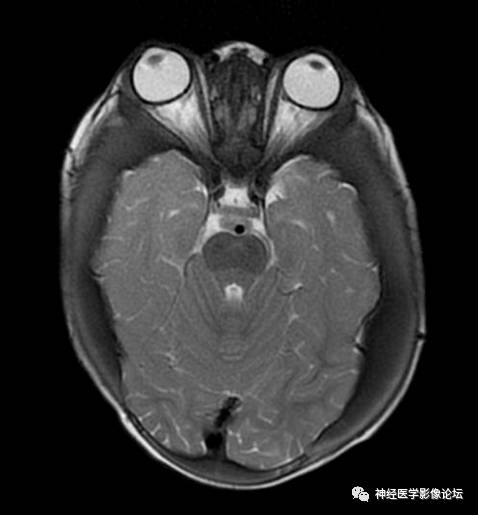
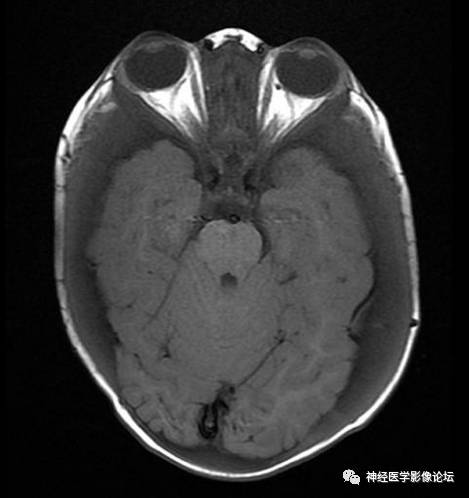
Diffuse calvarial thickening and sclerosis which elicit significant low signal intensity at all pulse sequences.